What Does a Syphilis Sore Look Like?

Last updated: September 8, 2026
Quick Answer
A syphilis sore, called a chancre, usually looks like a single small, round or oval ulcer with a smooth edge and a clean, firm base. It is most often painless and does not itch, which is exactly why it gets missed [5][9]. It can also look nothing like this description. Multiple sores, painful sores, or sores that resemble a pimple or a cut all happen too, so a description alone cannot confirm what it is [11][12].
Key Takeaways
- A classic chancre is firm, round or oval, roughly 0.5-2 cm across, with a smooth, clean base rather than pus or crust [5][9].
- Most primary sores are painless and don’t itch, which is a major reason syphilis spreads without either partner noticing [8][11].
- Sores usually heal on their own within weeks even without treatment, but the infection is still active [3][5][7].
- A sore can appear in the mouth, anus, or vagina where no one sees it [2][7].
- Syphilis sores can look like herpes, a canker sore, an ingrown hair, or a pimple. Only a test can tell them apart.
- After the first sore heals, a widespread rash can follow and looks completely different [1][6][13].
- The only way to know what a sore actually is comes from a swab, blood test, or both at a sexual health clinic.
What Does a Syphilis Sore Look Like?
A syphilis sore, or chancre, is classically a single firm, round or oval ulcer with a smooth edge and a base that looks clean rather than pus-filled or crusted [5][9]. It often starts as a small raised bump before breaking down into that shallow, open sore [5]. The surface is usually pink, red, or slightly gray, and it does not weep or discharge the way an infected pimple might [5][9][14].
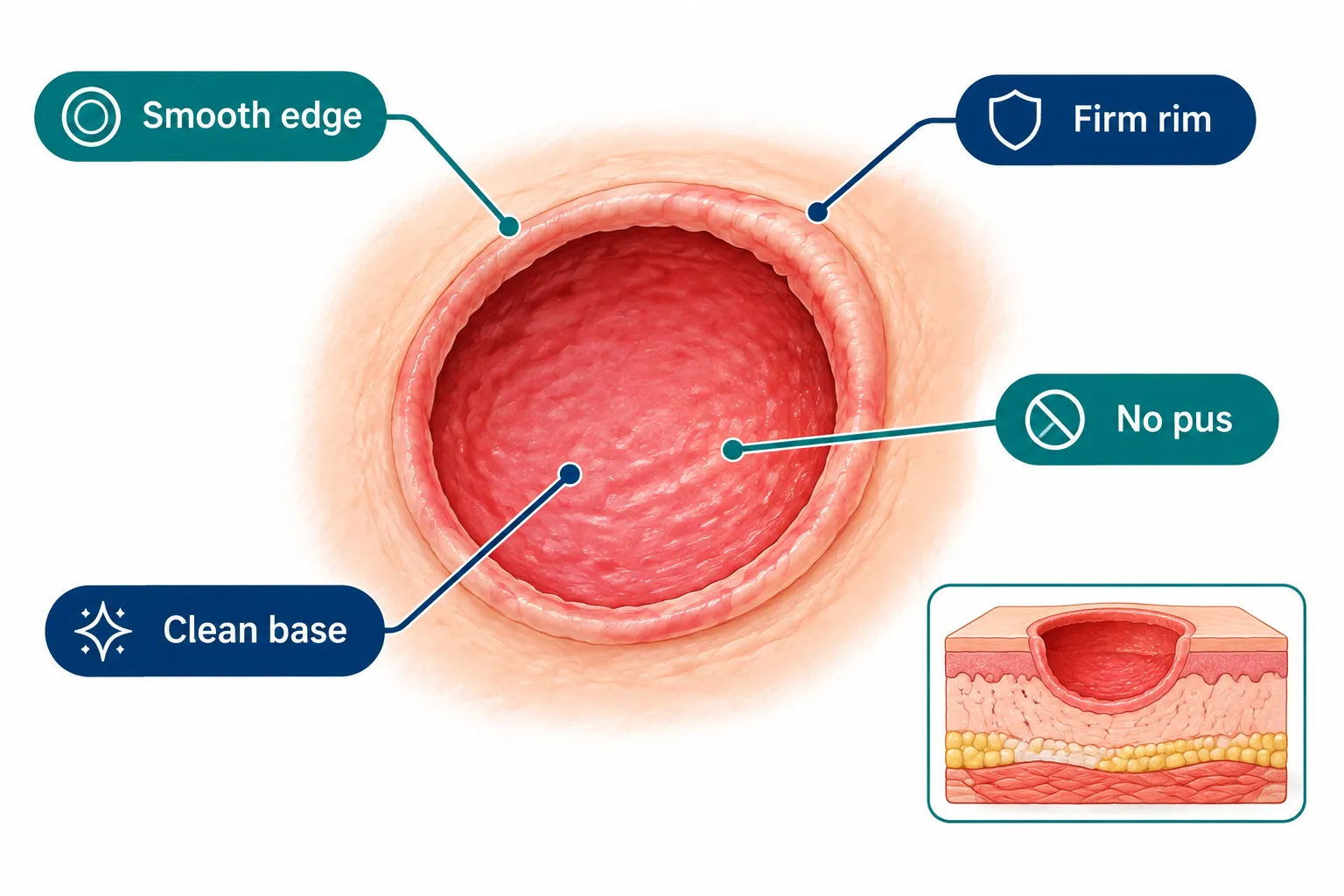
That “classic” picture is a useful starting point, not a guarantee. Public health guidance from 2026 is blunt about this: primary syphilis can also show up as multiple sores, sores with ragged edges, or sores that hurt, not just the single painless textbook version [11][12]. Because symptoms overlap so much between syphilis, herpes, and ordinary skin irritation, no photo or description can substitute for a test. That is the honest answer, even if it isn’t the tidy one you were hoping for.
How Long Does a Syphilis Sore Last, and Does It Hurt or Itch?
Most chancres are painless and don’t itch, and they tend to heal on their own within a few weeks even if nothing is done about them [3][5][7]. That healing does not mean the infection is gone. It means the visible sign is gone while the bacteria stays in the body [3][7].
A few points worth holding onto:
- Painless is typical, but not universal, some people do get a tender or sore lesion [11].
- Healing without treatment usually happens within roughly three to six weeks, though your clinic will tell you what timeline applies to your situation [3][5][7].
- A sore that “went away on its own” is one of the most common reasons people put off getting tested, and one of the most common regrets shared on the Syphilis Forum: Help and Support.
If a sore hurts a lot, that alone doesn’t rule syphilis out. It just means it does not fit the classic description, and a clinician still needs to look at it.
Syphilis Sore vs Herpes vs Canker Sore: How to Tell the Difference
You cannot reliably tell a syphilis sore apart from herpes or a canker sore by looking at it. Only a test can tell them apart. Here is what the general patterns look like, for context, not diagnosis:
| Feature | Syphilis chancre | Herpes sore | Canker sore |
|---|---|---|---|
| Number | Usually one, sometimes several | Clusters of blisters | Usually one or two |
| Pain | Usually painless | Usually painful, burning | Usually tender |
| Base | Smooth, clean | Crusted after blisters burst | White or yellow center |
Herpes tends to show up as a group of blisters that crust over and hurt, which is a different pattern from the smooth, firm chancre [6][10][14]. People describing that first herpes outbreak often say the pain was the worst part, which you can read about on the forum thread first outbreak was the worst pain of my life, does it stay like this. Because symptoms overlap this much, the only way to know which one you’re dealing with is a swab from the sore, sent for testing.
Can You Have a Syphilis Sore Without Knowing It, and Still Pass It On?
Yes, and this is one of the more important facts about syphilis. A sore inside the mouth, vagina, or rectum can go completely unnoticed unless someone examines that specific area [7][11]. It can also be painless enough on visible skin that a person mistakes it for a pimple, an ingrown hair, or a minor cut and never thinks about it again [9][10].
The sore is contagious while it is present, whether or not you’ve noticed it, and whether or not it hurts [8]. That is also true if it has already healed on its own but the infection is still active in the body. If you’ve had a new partner and any unexplained bump or sore in the last few weeks, that is reason enough to get tested, not proof of anything.
What Does Secondary Syphilis Rash Look Like, and Can Sores Come and Go?
If the first sore is not treated, a different-looking rash can follow weeks later, and it looks nothing like the original chancre. The secondary rash is often described as rough, reddish or reddish-brown spots that can appear on the trunk, palms, and soles, along with raised patches or moist gray-white lesions in warm areas like the groin or mouth [1][6][9][13].
This is one reason the phrase “it comes and goes” causes confusion. What actually happens is a sequence: the first sore heals, then weeks later a rash can appear that is a separate stage of the same untreated infection, not the original sore returning [1][6][13]. Between stages, syphilis can also sit with no visible signs at all, which is why relying on symptoms to track it doesn’t work.
Where Do Syphilis Sores Appear, and What Does It Mean If There’s No Discharge?
A chancre appears wherever the bacteria entered the body, most commonly the penis, vulva, vagina, cervix, anus, rectum, lips, tongue, or inside the mouth, and less often the hands [2][6][7][9]. A lack of discharge is actually typical, not a red flag against syphilis. A clean, dry base is one of the features that distinguishes a chancre from an infected pimple or a herpes sore that has burst and crusted [5][9][14].
If a sore is somewhere you can’t easily see, like inside the vagina or rectum, it may only be found during a clinical exam. This is part of why routine screening matters even without obvious symptoms, a point discussed often by people who have been through it on the forum.
Syphilis Sore Stages and Progression: What Happens Next
Untreated syphilis moves through stages, and each stage can look different. The primary sore appears first, heals on its own, and can be followed by a secondary rash weeks later if nothing was done [1][2][6][7]. After that, the infection can become “latent,” meaning there are no visible signs at all, sometimes for years, before later complications develop in a smaller number of cases [3][5][7].
The stage you’re in changes what a test needs to look for, which is another reason to ask the clinic that ran the test what your specific result actually means rather than guessing from symptoms alone. This varies by country and by clinic, including which tests are run together and how results are explained.
When Should You See a Doctor for a Syphilis Sore?
See a clinician for any solitary, firm sore in the genital, anal, or oral area that lasts more than a week, especially after a new partner, whether or not it hurts [9][10][14]. Painless does not mean harmless, and a sore that heals by itself does not mean the infection has cleared.
A sexual health clinic can examine the sore, take a swab, a blood sample, or both, and tell you what the results mean for your specific situation. If you’re not sure where to start, read what actually happens after a new diagnosis from people who have already gone through the appointment, the wait, and the conversation with a partner.
Conclusion
A syphilis sore is often a single, firm, painless ulcer with a clean base, but it can also be multiple, painful, or hidden somewhere you’d never check on your own. Because symptoms overlap this heavily with herpes, canker sores, and ordinary skin irritation, no description settles it. Get tested at a sexual health clinic, ask about partner notification if the result is positive, and bring any specific timing questions to the clinic that ran the test. If you want to read honest accounts before your appointment or share your experience once you have one, you can also ask anonymously on the syphilis forum.
FAQ
Can a syphilis sore look like nothing at all, just a red mark? Yes. Some chancres are subtle enough to pass as a minor scrape, ingrown hair, or faint red mark, especially early on. A description can’t confirm what a mark is, so if it’s unexplained and in a genital, anal, or oral area, it’s worth getting checked.
Does a syphilis sore bleed? It can bleed slightly if irritated, but active bleeding or pus is not typical of a classic chancre, which usually has a clean, dry base. This varies by presentation, so bleeding doesn’t rule syphilis in or out on its own.
If my sore healed on its own, do I still need to get tested? Yes. Healing of the visible sore does not mean the infection has gone. Blood testing can still detect it after the sore is gone, and your clinic can explain what timing applies to your situation.
Can two people have different-looking sores from the same exposure? Yes, appearance can vary between people even from the same source, because location, skin type, and stage of the sore all affect how it looks. That’s another reason a partner’s description isn’t a substitute for either person getting tested.
References
[1] 4622 Syphilis – https://my.clevelandclinic.org/health/diseases/4622-syphilis [2] Diagnosis – https://www.health.state.mn.us/diseases/syphilis/hcp/diagnosis.html [3] Cdc 150253 Ds1 – https://stacks.cdc.gov/view/cdc/150253/cdc_150253_DS1.pdf [5] Cdc 42437 Ds1 – https://stacks.cdc.gov/view/cdc/42437/cdc_42437_DS1.pdf [6] Std Pictures – https://www.healthline.com/health/std-pictures [7] 5ba867a9 C8fa 4618 B69b A2355621e371 – https://www.cdc.gov.tw/Uploads/5ba867a9-c8fa-4618-b69b-a2355621e371.pdf [8] Painless Contagious Truth About Syphilis Sores – https://npin.cdc.gov/publication/painless-contagious-truth-about-syphilis-sores [9] What Does Syphilis Look Like – https://freemedicaljournals.com/blog/what-does-syphilis-look-like/ [10] Think Its A Pimple It Could Be Stage One Syphilis – https://www.stdrapidtestkits.com/blog/post/think-its-a-pimple-it-could-be-stage-one-syphilis [11] Cdc 12284 Ds1 – https://stacks.cdc.gov/view/cdc/12284/cdc_12284_DS1.pdf [12] Diagnosis – https://www.health.state.mn.us/diseases/syphilis/hcp/diagnosis.html [13] 4622 Syphilis – https://my.clevelandclinic.org/health/diseases/4622-syphilis [14] What Does Syphilis Look Like – https://freemedicaljournals.com/blog/what-does-syphilis-look-like/
Leave a Reply
You must be logged in to post a comment.