
Last updated: September 4, 2026
Quick Answer
What happens if gonorrhea goes untreated is that the bacteria keep multiplying and spreading, and the damage builds over time instead of going away on its own. In women, this can lead to pelvic inflammatory disease, scarring, and infertility. In men, it can cause epididymitis and, less often, permanent problems with fertility. In rare cases the infection spreads through the blood and becomes life threatening. Only a test can confirm whether the infection is still there.
Key Takeaways
- Gonorrhea does not clear on its own. Without treatment, the bacteria stay active in the body.
- Women face a real risk of pelvic inflammatory disease, scarring, and infertility if it goes untreated.
- Men can develop epididymitis, and in some cases lasting fertility problems.
- Rarely, untreated gonorrhea spreads through the bloodstream to joints, skin, or organs.
- Pregnant people can pass it to a newborn during birth, which can cause serious eye infection.
- Untreated gonorrhea also raises the chance of picking up or passing on HIV[5][7].
- Symptoms overlap heavily with chlamydia and other infections. Only a test can tell them apart.
- You can get gonorrhea again after treatment. Being treated once does not protect you.
What Happens if Gonorrhea Goes Untreated?
Left untreated, gonorrhea does not resolve by itself. It keeps infecting the tissue where it landed and can move to nearby organs, sometimes causing damage that treatment later cannot fully undo.
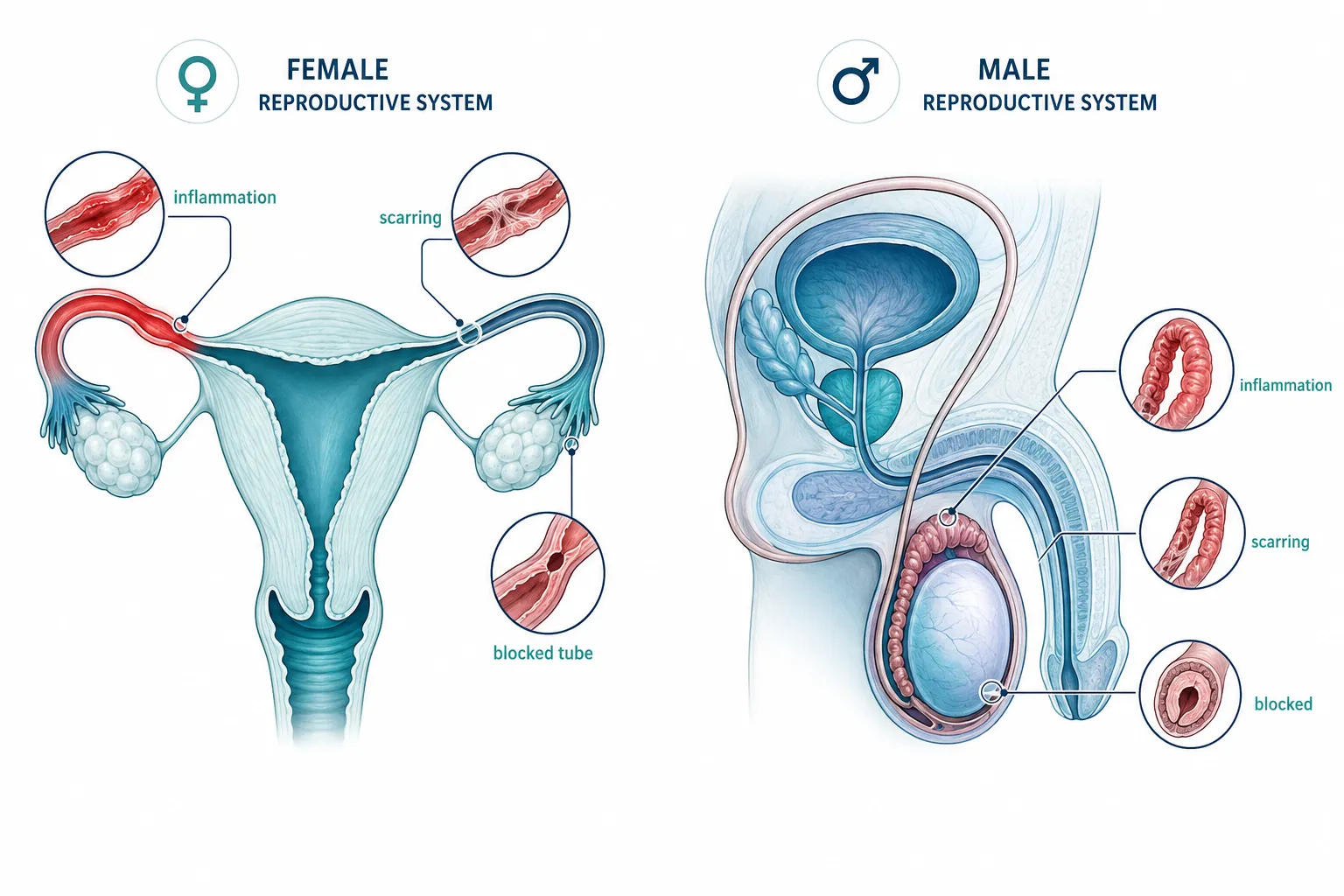
The bacteria, Neisseria gonorrhoeae, need a host to survive. Without antibiotics, the infection can persist for months, and during that time it can quietly cause scarring you would not notice until it caused a problem, like pain, or difficulty conceiving. Some people have no symptoms at all while this is happening, which is part of why untreated gonorrhea is dangerous: you cannot rely on how you feel to know what is going on inside your body[3][6].
What Are the Symptoms of Untreated Gonorrhea?
Untreated gonorrhea can cause discharge, burning when you urinate, or pelvic and testicular pain, but many people have mild symptoms or none at all. Symptoms overlap with other infections, so a symptom alone never confirms what you have.
Common signs people report, when they have any:
- Unusual discharge from the penis or vagina
- A burning feeling when urinating
- Pain or swelling in one testicle
- Pelvic or lower abdominal pain
- Bleeding between periods
If symptoms fade without treatment, that does not mean the infection is gone. It often means it has moved deeper, which is a common mistake people make when they decide to wait it out.
Can Untreated Gonorrhea Cause Infertility in Men or Women?
Yes, untreated gonorrhea can cause infertility in both women and men, though the path differs by sex. In women it usually happens through scarring of the fallopian tubes; in men it is less common and usually linked to scarring of the tubes that carry sperm.
In women, untreated infection can trigger pelvic inflammatory disease, which scars the fallopian tubes. Scarred tubes can block eggs from reaching the uterus, causing infertility, or let a fertilized egg implant in the tube instead, causing an ectopic pregnancy[5][7].
In men, untreated gonorrhea can cause epididymitis, inflammation of the tube that carries sperm from the testicle. This causes swelling and pain, and in some cases leads to scarring severe enough to affect fertility, though this outcome is less common than the reproductive damage seen in women[4][6][11].
What Is Pelvic Inflammatory Disease, and How Long Does It Take for Gonorrhea to Cause Complications?
Pelvic inflammatory disease (PID) is an infection of the uterus, fallopian tubes, and surrounding tissue that untreated gonorrhea can trigger in women. How long this takes varies by person, so no one can give you a fixed timeline from a description alone.
PID can develop while the original infection is still active, and it can happen without obvious symptoms, which is why some women only find out after fertility problems or chronic pelvic pain appear[3][6]. There is no set number of days or weeks that applies to everyone; this is one of the reasons untreated infections are riskier than treated ones, since you lose the ability to predict what happens next.
Can Untreated Gonorrhea Spread to Other Parts of Your Body, and Is It Life Threatening?
Yes, in rare cases untreated gonorrhea can spread through the bloodstream to other parts of the body, a condition called disseminated gonococcal infection, and this can become life threatening. It is uncommon, but it is real.
Signs of this spread can include fever, joint pain and swelling, skin sores, and a rash. In severe, rare cases the infection can affect the heart, brain, or other organs[4][5][7][10][11]. If you have joint swelling, fever, or a spreading rash along with a known or suspected gonorrhea exposure, that is a reason to get to a clinic or emergency care promptly, not to wait and see.
What Happens if Gonorrhea Goes Untreated During Pregnancy?
Untreated gonorrhea during pregnancy can cause PID and ectopic pregnancy for the pregnant person, and it can be passed to the baby during delivery, which can cause a serious eye infection in the newborn. This newborn infection can lead to permanent vision damage if it is not treated quickly[4][7][11].
Untreated gonorrhea in pregnancy has also been linked to complications like low birth weight[11][12]. If you are pregnant and have had a possible exposure or a symptom, tell your clinic directly; they will tell you what testing and follow-up applies in your situation.
How Common Are Complications From Untreated Gonorrhea, and Can You Get It Twice?
No fixed percentage applies to everyone, because how often complications happen depends on how long the infection goes untreated, your body, and other factors that vary case by case. What is certain is that untreated infection carries real risk, and that risk grows the longer treatment is delayed.
Yes, you can get gonorrhea again after being treated. Treatment clears that infection; it does not protect you from a new exposure. This is why partner notification and retesting matter, and why some people end up asking the same questions twice, months apart.
How Do You Test For and Treat Gonorrhea?
Gonorrhea is usually tested with a swab from the affected site or a urine sample, run through a NAAT test at a lab, and your clinic will tell you which sample they need based on your exposure. Treatment involves antibiotics, but this article will not name a specific drug or dose, because protocols change and vary by country and by resistance patterns in your area, ask the clinic that ran the test what applies to your case.
This matters more than usual right now. Antibiotic-resistant gonorrhea is increasing, including resistance to ceftriaxone, one of the last widely effective options, and health agencies in Europe and the WHO have both flagged this as a growing problem through 2026[2][7][8][9]. Resistant infections can fail standard treatment, which means some people end up living with an infection that behaves like an untreated one even after seeing a clinic. If symptoms return after treatment, that is worth raising directly, not assuming it means reinfection alone.
What’s the Difference Between Gonorrhea and Chlamydia if Left Untreated?
Both untreated gonorrhea and untreated chlamydia can cause PID, infertility, and pregnancy complications, and their symptoms overlap so closely that only a test can tell them apart. You cannot distinguish them by how you feel.
The bacteria are different, and gonorrhea has a higher profile right now because of rising antibiotic resistance, which makes some infections harder to clear[2][8][9]. But from a symptom standpoint, or from what damage untreated infection can eventually cause, the two conditions look similar enough that guessing is not a safe approach either way.
How Do I Know if I Have Gonorrhea Complications?
No one can tell you that from a description of symptoms alone. Complications like PID, epididymitis, or disseminated infection need a clinical exam and testing to confirm, not a checklist read online.
If you have pelvic pain, testicular pain and swelling, fever, joint swelling, or a rash and you have had a possible exposure, contact a sexual health clinic and describe exactly what you are feeling. They can examine the exposure site, order the right tests, and tell you what the results mean for you specifically.
Conclusion
Untreated gonorrhea does not resolve on its own, and the risk is not evenly distributed: it ranges from mild and manageable to permanently damaging, depending on how long it goes untreated and where it spreads. The only way to know your own situation is to get tested, and the only way to know treatment worked is to retest as your clinic advises.
If you are dealing with a positive result, a symptom, or a recent exposure, start with a sexual health clinic near you. If you want to hear from people who have actually been through this, read through the gonorrhea forum for help and support, where you can share your experience or ask anonymously, including in threads like newly diagnosed and trying to understand what happens next or symptoms that returned after treatment.
FAQ
Can untreated gonorrhea go away by itself? No. Gonorrhea does not clear without treatment; it can persist for months and continue to cause damage during that time.
How long can you have gonorrhea without knowing? This varies by person, since some people have no symptoms at all. Only testing can tell you whether you have it, regardless of how long it has been present.
Does untreated gonorrhea always cause infertility? No. Infertility is a possible outcome, not a guaranteed one, and it depends on factors like how long the infection went untreated and whether PID or epididymitis developed. This is one reason getting tested early matters.
Can men have permanent damage from untreated gonorrhea? Yes, in some cases. Epididymitis and urethral scarring can occur, and rarely this affects fertility, though this is less common in men than the reproductive damage seen in women[4][6][11].
References
[1] 2026 07 Gonorrhea Enzyme Triggers Therapy Multidrug – https://phys.org/news/2026-07-gonorrhea-enzyme-triggers-therapy-multidrug.html [2] Antibiotic Resistant Gonorrhea Cases On The Rise In Europe Health Agency Warns – https://www.euronews.com/health/2026/07/20/antibiotic-resistant-gonorrhea-cases-on-the-rise-in-europe-health-agency-warns [3] Complications – https://stanfordhealthcare.org/medical-conditions/sexual-and-reproductive-health/gonorrhea/symptoms/complications.html [4] 4217 Gonorrhea – https://my.clevelandclinic.org/health/diseases/4217-gonorrhea [5] Index – https://www.cdc.gov/gonorrhea/about/index.html [6] 3 Scary Complications Gonorrhea – https://npin.cdc.gov/publication/3-scary-complications-gonorrhea [7] Gonorrhoea (neisseria Gonorrhoeae Infection) – https://www.who.int/news-room/fact-sheets/detail/gonorrhoea-(neisseria-gonorrhoeae-infection) [8] Stopping Multi Drug Resistant Gonorrhoea – https://www.who.int/activities/stopping-multi-drug-resistant-gonorrhoea [9] pubmed.ncbi.nlm.nih.gov – https://pubmed.ncbi.nlm.nih.gov/42057895/ [10] 2026 06 Ai Screens Million Compounds Uncover – https://medicalxpress.com/news/2026-06-ai-screens-million-compounds-uncover.html [11] 4217 Gonorrhea – https://my.clevelandclinic.org/health/diseases/4217-gonorrhea [12] 2026 07 Gonorrhea Enzyme Triggers Therapy Multidrug – https://phys.org/news/2026-07-gonorrhea-enzyme-triggers-therapy-multidrug.html